One of the largest companies in the pet food segment in Brazil, operating a highly automated industrial plant, found in WEG solutions a consistent path to enhance asset reliability and improve the productive performance of its operations.
With large-scale equipment located in hard-to-access areas, such as mills used in critical stages of the process, the challenge was to maintain production continuity without exposure to unexpected failures or emergency corrective interventions. In this context, predictability became a decisive factor in sustaining operational efficiency.
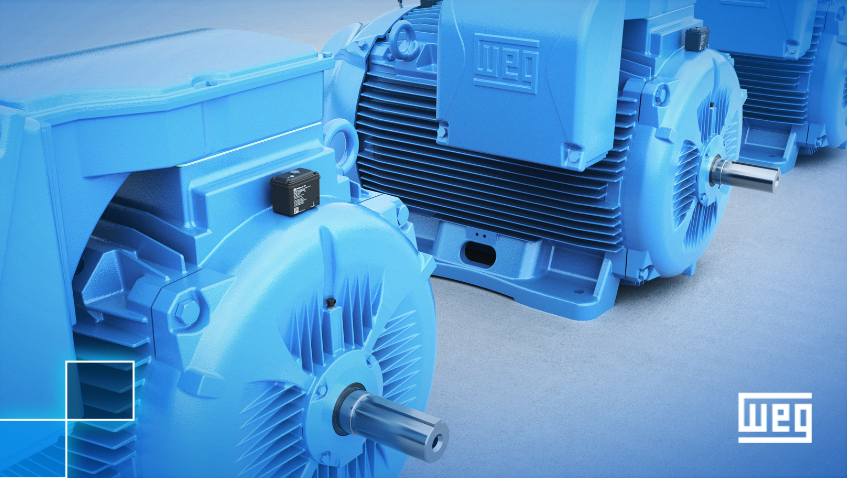
To address this scenario, the company adopted WEG’s asset management solution, consisting of WEGscan100 sensors integrated with the WEG Motion Fleet Management (MFM) software. In total, 132 assets began to be continuously monitored through 149 sensors, along with gateways and edge devices, enabling a centralized, real-time view of equipment condition.
With support from the WEG Motion Drives Operation Center, 30 technical reports were generated throughout 2025, identifying recurring failure patterns such as unbalance, misalignment, and bearing wear—especially in mills, which are considered critical assets due to their direct impact on production and high maintenance costs.
During joint analyses conducted by the customer, WEG, and partner TECPRED Predictive Maintenance, a relevant anomaly was identified in the grits mill 302. The MFM software’s artificial intelligence detected, at an early stage, rotor shaft bending in the electric motor and a base misalignment of approximately 2.3 mm, which was already causing lateral shaft displacement.
Given the limitation on intermediate shutdowns, the strategy adopted was to intensify asset monitoring until the scheduled general shutdown. The intervention was carried out in a planned manner, including component replacement and full base correction, restoring ideal operating conditions without emergency impact on production.
This approach prevented a failure that could have halted the plant for at least two days, generating estimated savings of R$220 thousand for this equipment alone. Over the year, the use of WEG Motion Fleet Management combined with the WEG Motion Drives Operation Center service resulted in approximately R$660 thousand in maintenance cost savings.
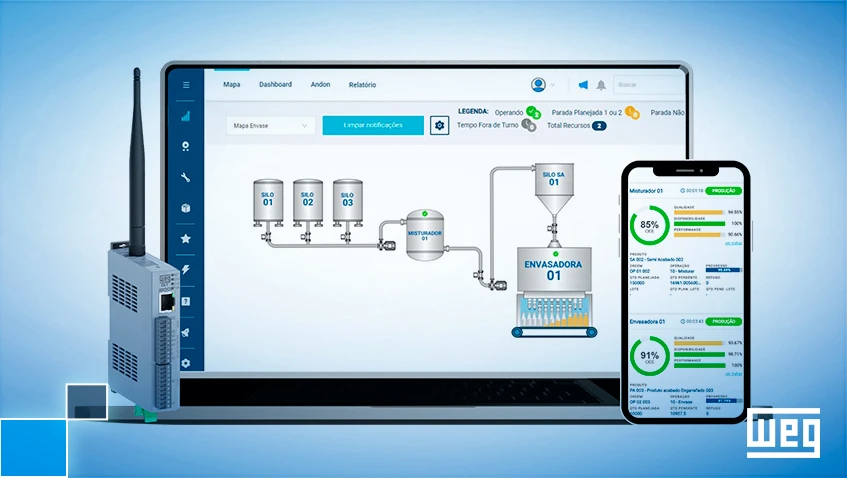
In parallel with the asset reliability strategy, the company advanced in the digitalization of its production process through the implementation of WEG’s MES system, using the PC-Factory platform. The solution integrated corporate systems (ERP) with the shop floor, connecting programmable logic controllers (PLCs), supervisory systems, and operator stations within a single architecture.
This integration enabled production orders to be executed accurately in dosing, mixing, and extrusion stages, eliminating inconsistencies between planning and execution. The system also provided full process traceability, real-time monitoring, and automatic calculation of Overall Equipment Effectiveness (OEE), in addition to offering industrial intelligence dashboards to support decision-making.
With automation and data integration, the plant achieved a 17% increase in productivity, driven by better utilization of available resources, reduction of losses, and greater control over energy and raw material consumption.
The integrated approach between asset management solutions and the MES system consolidated a more efficient operational model, in which predictive maintenance ensures equipment availability while process digitalization guarantees consistency, quality, and productive performance.
The project involved collaboration between the customer, WEG, and TECPRED teams, highlighting the role of integrating technology, process expertise, and specialized analysis in advancing industrial operations.